
Aotearoa’s Seabird Superhighway: Meet the Kororā (Little Blue Penguin)
Did you know the Hauraki Gulf is a globally significant seabird superhighway? While only about 365 of the world's 11,000 bird species are considered seabirds, a staggering one-third of all seabirds are found in Aotearoa, New Zealand.
Critically, the Gulf itself hosts 27 breeding species, including five that breed nowhere else on Earth. This includes two avian treasures: the endangered tara iti (NZ fairy tern), our rarest bird, and the takahikare raro (NZ storm petrel), which was famously rediscovered in 2003 after being thought extinct. (Information and inspiration courtesy of Chris Gaskin and the Seabird Trust)
Countless other seabirds also rely on this region — including one of its smallest and most recognisable residents: the kororā.
4: Kororā (Little Blue Penguin)
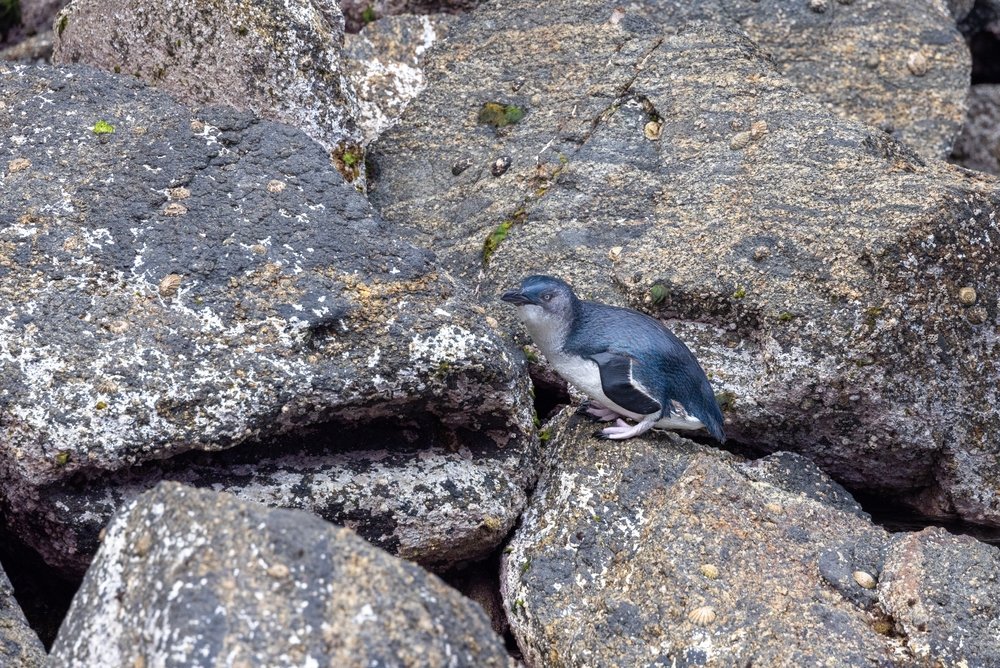
Small, secretive, and surprisingly tough, the kororā is the world’s smallest penguin.
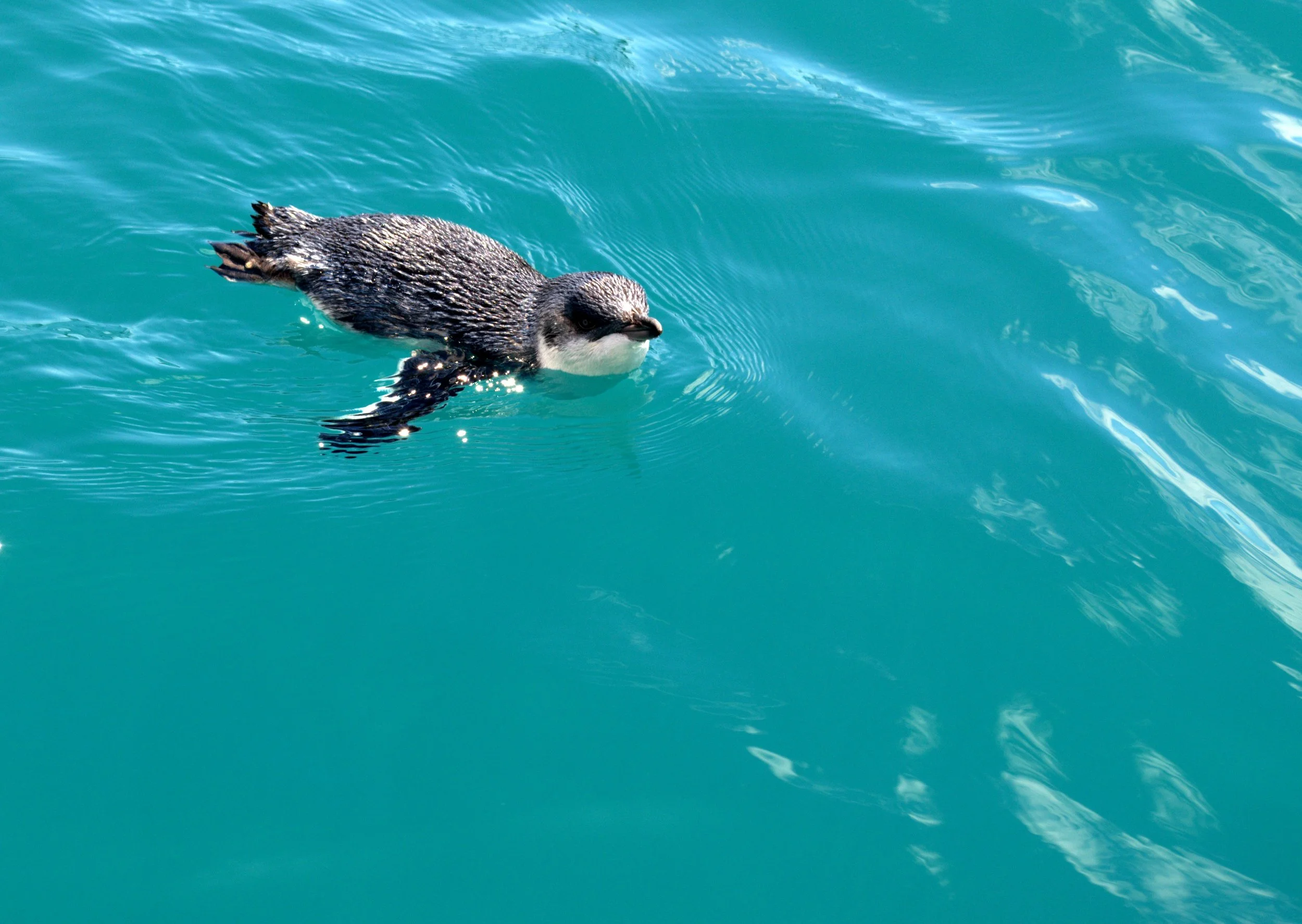
Standing little more than 30 centimetres tall, these blue-grey seabirds spend much of their lives out on the water, paddling through coastal currents in search of small fish and krill. But despite being familiar to many New Zealanders, much of their lives remain hidden from view.
That’s because kororā are mostly active under the cover of darkness.
At dusk, they emerge from the sea in small groups, often waiting offshore until light levels drop before scrambling ashore to their burrows. For anyone lucky enough to witness it, the sight is unforgettable. Tiny penguins darting across rocks and beaches with surprising speed and determination.
Life on the edge
Kororā nest close to the coastline, sheltering in burrows, rock crevices, driftwood, or dense vegetation. Historically, they would have nested safely along much of Aotearoa’s coastline and offshore islands.
Today, life on land has become far more complicated.
Because they come ashore every night during breeding season, kororā are especially vulnerable to introduced predators. Rats, stoats, and feral cats can prey on eggs, chicks, and even adult birds, while dogs remain one of the most serious threats to mainland colonies.
Even a single uncontrolled dog can devastate an entire nesting site in a matter of minutes.
Human activity also creates challenges. Coastal development can destroy or fragment nesting habitat, while artificial lighting may disorient birds returning from sea. Roads near colonies can become dangerous crossing points, particularly during the breeding season when adults travel regularly between burrows and feeding grounds.
For a bird that relies on the narrow boundary between land and sea, even small disruptions can have major consequences.
More than just a penguin
Although kororā are charismatic, they are also important indicators of coastal ecosystem health.
As predators of small fish and marine invertebrates, they are closely linked to changes in ocean conditions and food availability. Shifts in sea temperature, prey abundance, and marine productivity can all influence breeding success and survival rates.
Scientists also use kororā monitoring to better understand broader environmental pressures around coastlines, particularly in heavily populated regions like the Hauraki Gulf.
Because they return to the same nesting areas year after year, kororā can reveal how changing coastlines, both natural and human-driven, are affecting seabird populations over time.
Protecting a species close to home
Despite the pressures they face, kororā continue to persist around the Hauraki Gulf, including on Waiheke and many surrounding islands.
Predator control, habitat restoration, community monitoring, and public awareness all play an important role in protecting breeding sites. Simple actions, like keeping dogs away from nesting areas, reducing artificial light near colonies, and protecting coastal vegetation, can make a significant difference.
Unlike many seabirds that spend most of their lives far offshore, kororā live remarkably close to us. In many places, they nest alongside walking tracks, beaches, roads, and backyards, often unnoticed. That closeness makes them both vulnerable and deeply special.
So next time you’re near the coast after sunset, listen carefully. The rustling in the rocks or soft calls drifting through the dark might not just be the sound of the ocean, it could be kororā returning home.
Sources
Information and inspiration provided by Chris Gaskin and the Seabird Trust.
Additional information sourced from the Department of Conservation (DOC) and Birds New Zealand.
Ecological and behavioural insights adapted from DOC resources and seabird monitoring research from northern Aotearoa.