
Aotearoa’s Seabird Superhighway: Meet the Tara (White-fronted tern)
Did you know the Hauraki Gulf is a globally significant seabird superhighway? While only about 365 of the world's 11,000 bird species are considered seabirds, a staggering one-third of all seabirds are found in Aotearoa, New Zealand.
Critically, the Gulf itself hosts 27 breeding species, including five that breed nowhere else on Earth. This includes two avian treasures: the endangered tara iti (NZ fairy tern), our rarest bird, and the takahikare raro (NZ storm petrel), which was famously rediscovered in 2003 after being thought extinct. (Information and inspiration courtesy of Chris Gaskin and the Seabird Trust)
Among the Gulf’s most familiar seabirds is another remarkable flyer: the tara (white-fronted tern)
Tara (White-fronted tern)
Elegant, fast-moving, and almost constantly in motion, tara are a defining part of the Hauraki Gulf coastline.
Often seen hovering above the water before plunging delicately for fish, these sleek white seabirds are highly adapted hunters, relying on sharp eyesight and quick aerial manoeuvres to catch small schooling fish near the ocean surface.
Unlike some seabirds that spend much of their lives far offshore, tara are closely tied to the Gulf’s coastal waters and islands, where they gather in noisy breeding colonies throughout spring and summer.
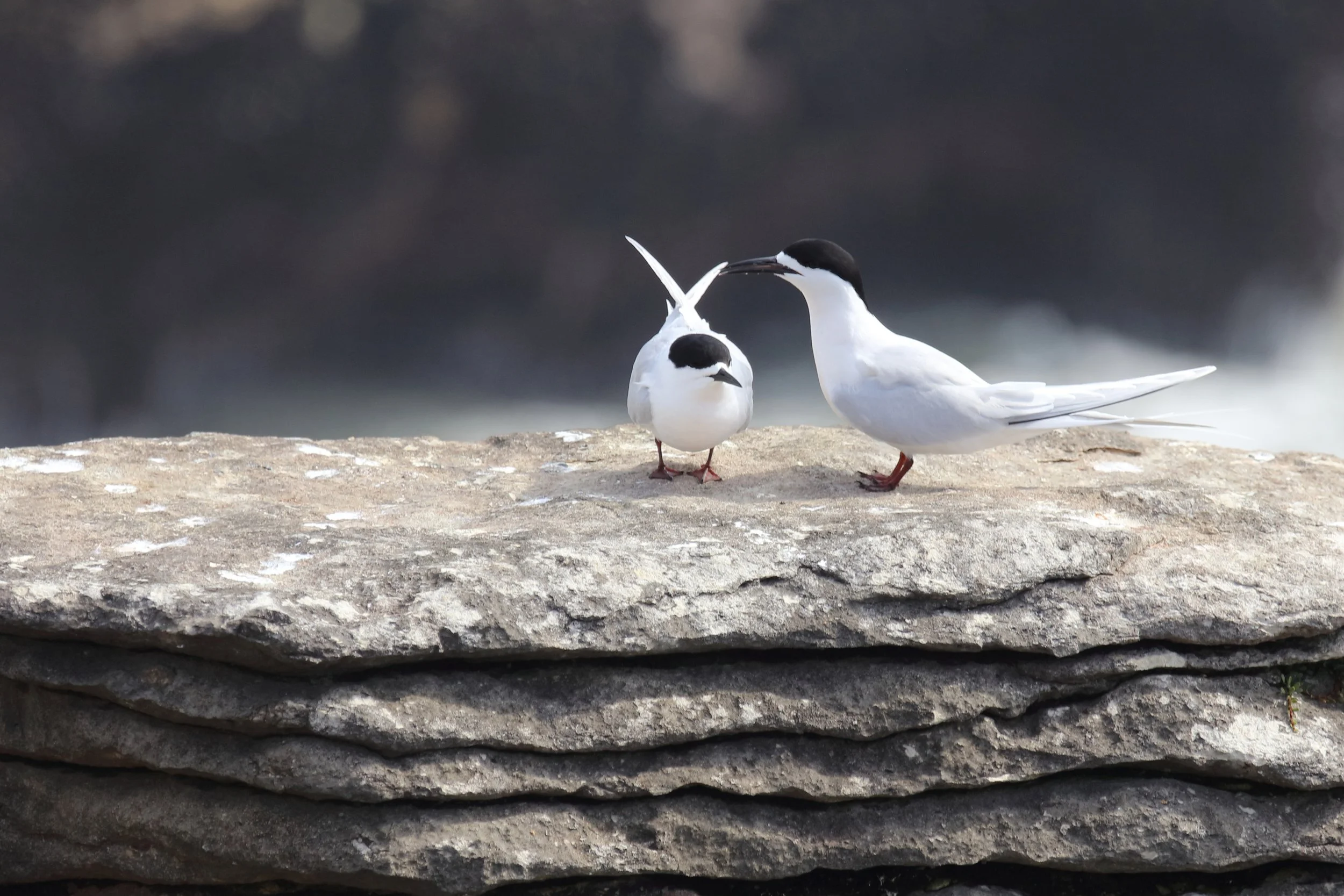
Tara (White-fronted tern)
Life in a colony
White-fronted terns breed in dense colonies on rocky islands, shell banks, and exposed coastlines around the Gulf. Hundreds, sometimes thousands, of birds may nest together in tightly packed groups, creating a constant chorus of calls and movement.
This colonial lifestyle offers protection through numbers, but it also comes with challenges.
Because tara nest directly on the ground with little shelter, eggs and chicks are highly vulnerable to disturbance and predation. Rats, stoats, and feral cats can devastate colonies, while human activity near nesting sites may cause adults to abandon nests temporarily, exposing eggs and chicks to heat stress or opportunistic predators such as gulls.
Many colonies also occupy low-lying coastal sites vulnerable to storms and rising sea levels.
For a bird that depends on exposed nesting habitat, small changes in environmental conditions can have significant impacts.
Following the fish
Like many seabirds, tara are deeply connected to the health of the marine ecosystem.
Their diet consists largely of small schooling fish such as pilchards, anchovies, and juvenile fish species gathered close to the ocean surface. Because these prey species respond quickly to changing ocean conditions, tara can provide valuable insights into wider marine ecosystem shifts.
Recent research in the Hauraki Gulf has even used photographs taken by members of the public to better understand tara diet and feeding behaviour. By analysing images of birds carrying prey back to colonies, researchers have been able to identify what species are being fed to chicks and where food may be available across the Gulf.
This kind of community-powered science is helping build a clearer picture of how marine food webs are changing over time.
A changing coastline
Monitoring across the wider Hauraki Gulf shows that tara colonies can shift noticeably from year to year.
Some breeding sites appear and disappear between seasons, while colony size can fluctuate depending on food availability, weather conditions, and disturbance levels. This dynamic behaviour reflects the highly responsive nature of seabirds living at the boundary between ocean and land.
Because tara rely on healthy fish populations close to shore, they are considered important indicators of coastal ecosystem health.
Changes in where they breed, what they eat, and how successfully they raise chicks can all help researchers better understand what is happening beneath the surface of the Gulf.
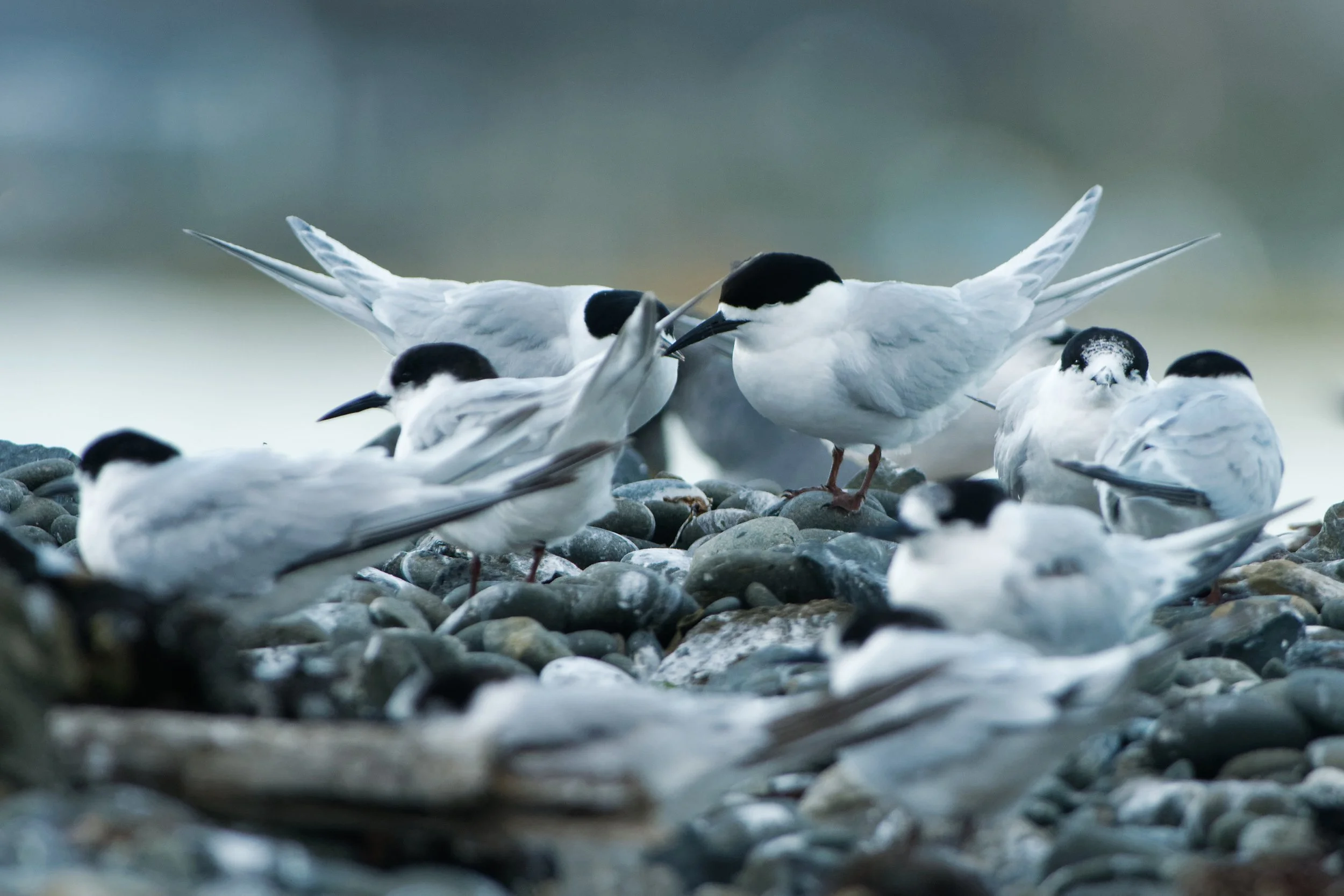
Tara (White-fronted tern)
More than a flash of white over the water
For many people, tara are simply part of the backdrop of summer, flashes of white wings above beaches, harbours, and ferry wakes.
But these birds are carrying important ecological stories.
Their colonies reveal the pressures facing coastal habitats. Their feeding behaviour reflects the health of marine food webs. And their continued presence around the Hauraki Gulf depends on the protection of both ocean and shoreline ecosystems.
So next time you see a tara hovering above the water or carrying a tiny silver fish back toward shore, take a moment to watch closely.
What looks effortless from above is part of a finely balanced system connecting sea, land, and the future of the Gulf itself.
Sources
Information and inspiration provided by Chris Gaskin and the Seabird Trust.
Additional information sourced from the Department of Conservation (DOC) and Birds New Zealand.
Research insights adapted from seabird monitoring and tara diet studies conducted in the Hauraki Gulf region.