
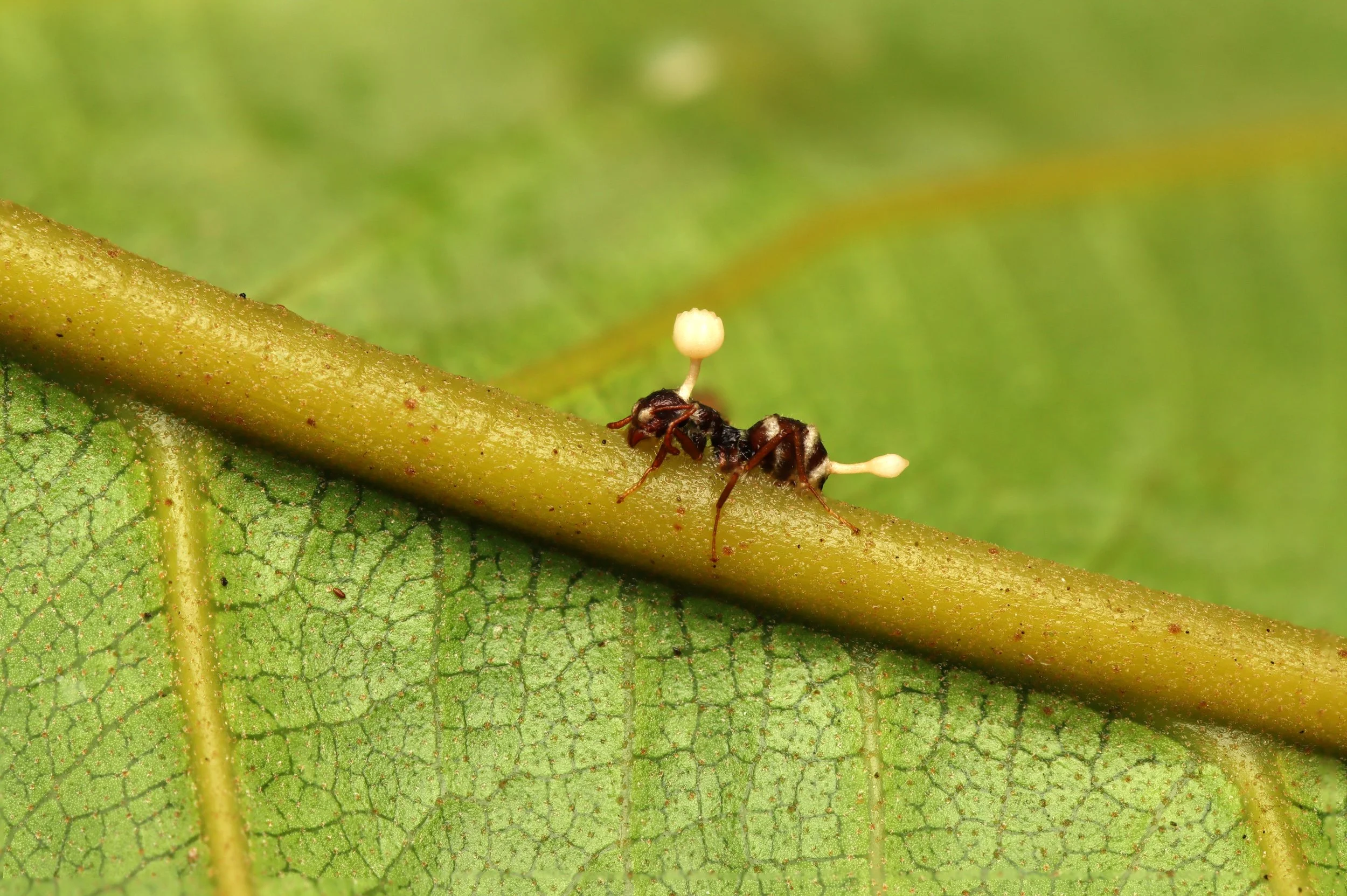
Dead Ant Because of Cordyceps Fungus
Zombies in our midst! Anyone who has played the video game The Last of Us or watched the subsequent HBO show will be terrifyingly familiar with the fungus Cordyceps. In this fictional world, the spores of this fungus evolve to infect humans, causing them to become violent zombies before eventually collapsing and releasing puffs of spores to infect their next victim. Chaos ensues, civilisation collapses, and small bands of survivors remain to pick up the pieces and avoid infection: classic zombie trope. Thankfully, this is all fiction if you are a human - for insects, however, Cordyceps are a very real ‘zombie’ threat.
An insect crawling along the forest floor or burrowing underground might have the misfortune of running into a Cordyceps spore. Once they make contact with one, there is no hope for them. The spore will either be ingested or land on the exoskeleton. If it lands on the outside of the host, enzymes will be released that allow it to penetrate the skin. Once inside, the fungus begins to grow, using the host's body as a nutrient.
As if that wasn’t bad enough, the fungus takes control of the host’s muscle fibres, altering their behaviour to best suit fungus reproduction. Insects at that stage are often called zombies. The behaviours vary between insect species. In ants, for example, the fungus will lead the ant away from the colony, preventing other members from removing the spore. The fungus spores need elevation and wind flow for optimal dispersal, so the insects are forced to climb by their passengers. In the case of ants, they will bite a leaf in a death grip and hang off it. Once the insect is in position, the fungus will finally consume it and grow stalks out through the host's head. The stalks are covered in spores, which drop and, if all goes well, will be encountered by a future host insect - and everything starts over again.
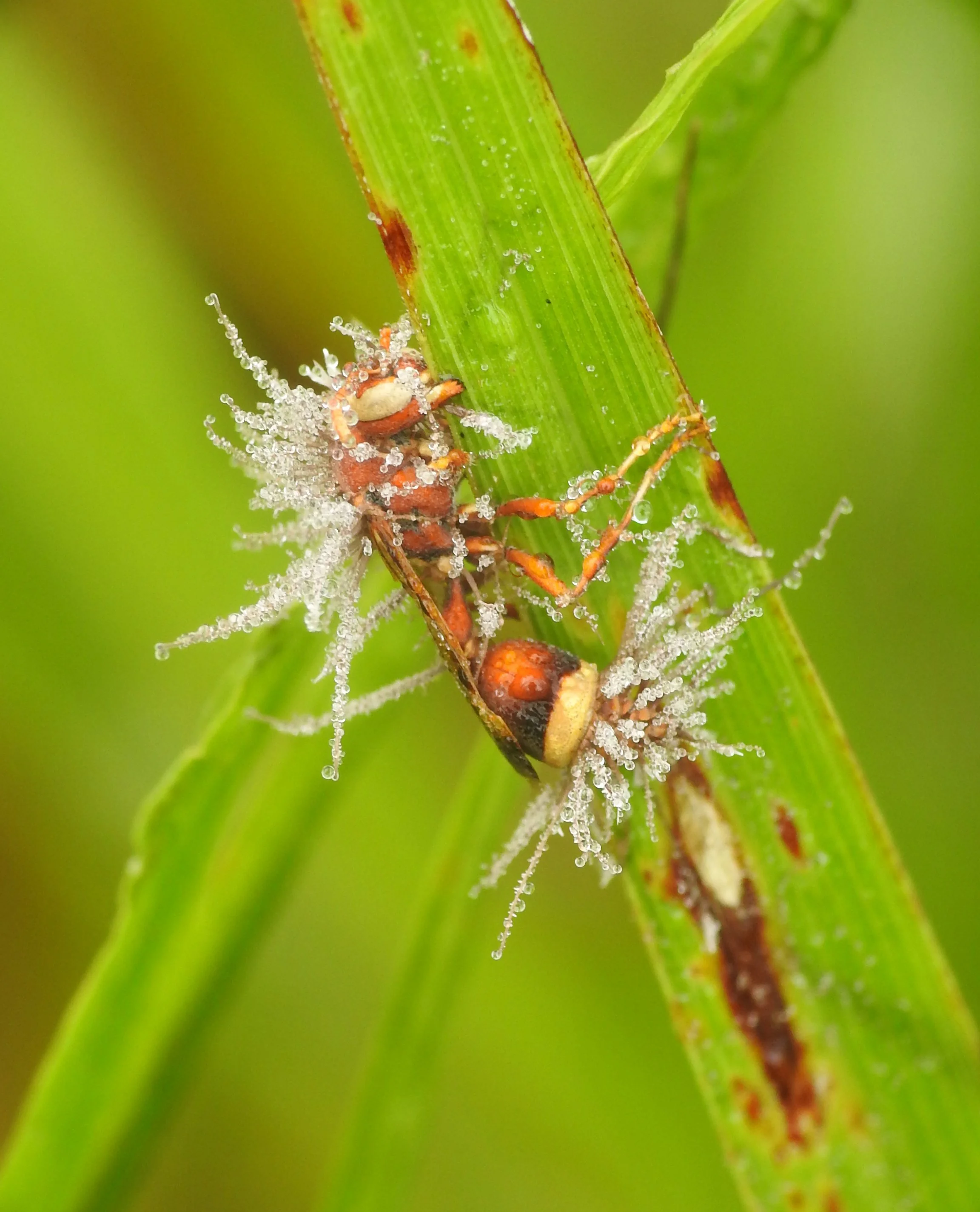
Paper Wasp infected by Cordyceps fungus
There are at least 200 described species of Cordyceps in the world, and twelve in Aotearoa, where they are known as āwheto in Te Reo. The victims of Cordyceps in Aotearoa range from caterpillars to cicada grubs, which are known collectively as vegetable insects. ‘Vegetable insect’ is a bit of a misnomer because, of course, neither insects nor fungi are vegetables.
When looking at the fungus when it has overtaken an insect host, it is an easy mistake to make. The earliest written description of the fungus was in caterpillars by a naturalist in 1763 who wrote: “In the month of May it buries itself in the earth and begins to vegetate. By the latter end of July, a tree arrives at its full growth and resembles a coral branch, and is about three inches high and bears several little pods, which, dropping off, become worms, from thence flies, like the English caterpillar.” It was thought then that it was a caterpillar that turned into a plant and then into a butterfly.
Cordyceps aren’t as bad as they sound though - they are used to treat a variety of illnesses in traditional Chinese medicine and have been part of the wellness boom over the last decade. Traditionally, vegetable caterpillars were eaten by iwi in areas of the country where they were plentiful. They were also used in making the pigment for tā moko, where vegetable caterpillars were harvested, dried, charred, and mixed with tree sap or animal fat. When applied to uhi (tools used to carve the skin), it left a permanent mark. In the early 20th century, vegetable caterpillars were sold as curios to tourists by people running alongside the very slow steam trains of the time.
Cordyceps also serves as insect-killing, bio-regulators in natural ecosystems, primarily controlling insect populations—particularly caterpillars and ants—and facilitating nutrient cycling.
— Written by Tilde Sorensen, Te Korowai o Waiheke Team Member