
Aotearoa’s Seabird Superhighway: Meet the Ōi (Grey-faced Petrel)
Did you know the Hauraki Gulf is a globally significant seabird superhighway? While only about 365 of the world's 11,000 bird species are considered seabirds, a staggering one-third of all seabirds are found in Aotearoa, New Zealand.
Critically, the Gulf itself hosts 27 breeding species, including five that breed nowhere else on Earth. This includes two avian treasures: the endangered tara iti (NZ fairy tern), our rarest bird, and the takahikare raro (NZ storm petrel), which was famously rediscovered in 2003 after being thought extinct. (Information and inspiration courtesy of Chris Gaskin and the Seabird Trust)
Countless other seabirds also visit this vital region, but they are not as well known as forest birds – so let’s put a few in the spotlight…
2: Ōi, Grey-faced Petrel
Did you know one of the Hauraki Gulf’s most important residents spends most of its life far out at sea, only returning under the cover of darkness?
The Ōi (grey-faced petrel) is one of Aotearoa’s true ocean wanderers. Like many seabirds, it belongs to a group superbly adapted to life on the open ocean, and helps explain why this part of the world is considered the global centre of seabird diversity.
Across Aotearoa, seabirds dominate our native birdlife in ways few people realise. Of the roughly 370 seabird species worldwide, around a third spend time here. And many, like the Ōi, rely on places like the Hauraki Gulf to breed.
While they may be less visible than tūī or kererū, these birds are deeply woven into the health of both our oceans and our forests.
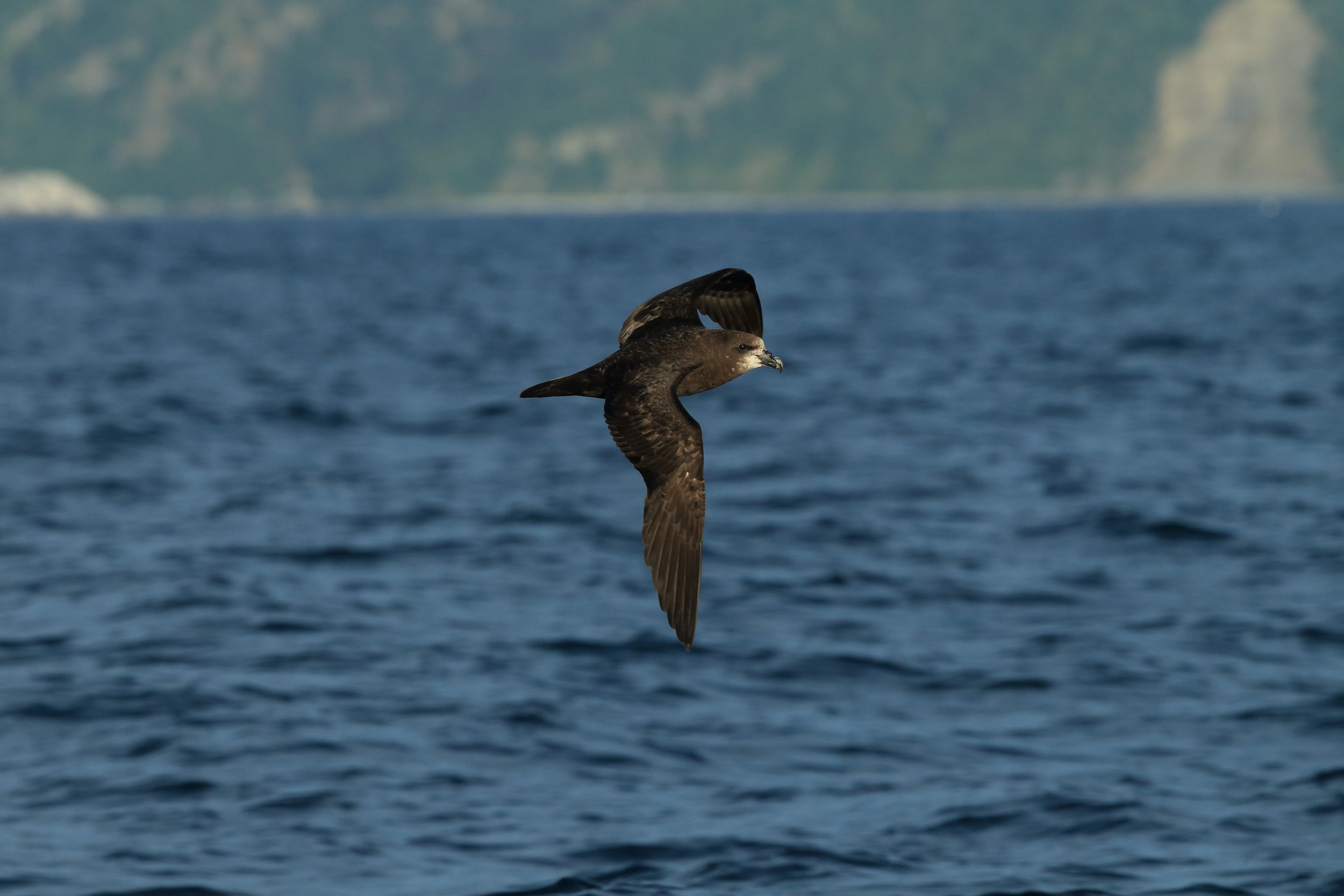
Grey faced petrel/Ōi by Frank Fichtmueller
Ōi are one of the northern North Island’s most widespread burrow-nesting seabirds, breeding on islands scattered throughout the Hauraki Gulf, including The Noises, Tiritiri Matangi, Motuora, and further afield to places like Rakino, Rotoroa and Motutapu.
They also persist on parts of the mainland, a rare feat for a burrow-nesting seabird, clinging to headlands and coastal forest remnants despite centuries of pressure from introduced predators.
During the day, they are almost absent from view, feeding far out at sea on squid and small fish. But at night, the story changes.
Under darkness, Ōi return to land, navigating vast distances with remarkable precision, to reunite with their burrows. Their calls, often described as eerie or haunting, carry through coastal forests as they move between sea and land. For those lucky enough to hear it, it’s a reminder that an entirely different world exists after sunset.
Ōi nest in burrows dug into coastal soils, often beneath forest cover. These underground homes protect their single chick, but also make them especially vulnerable. Introduced predators such as rats, stoats and dogs can devastate breeding colonies, while artificial light can disorient birds returning from sea.
Because of this, Ōi have become a key species in restoration efforts across northern Aotearoa.
Projects like Tāwharanui Open Sanctuary have successfully attracted Ōi back to breed using a combination of predator control, habitat restoration, and even sound systems that play seabird calls to guide birds back to safe nesting areas.
Closer to home, ongoing predator control and restoration work across the Hauraki Gulf is helping to protect existing colonies and create the conditions for their return.
Despite spending most of their lives far from land, seabirds like the Ōi are vital connectors between ocean and forest.
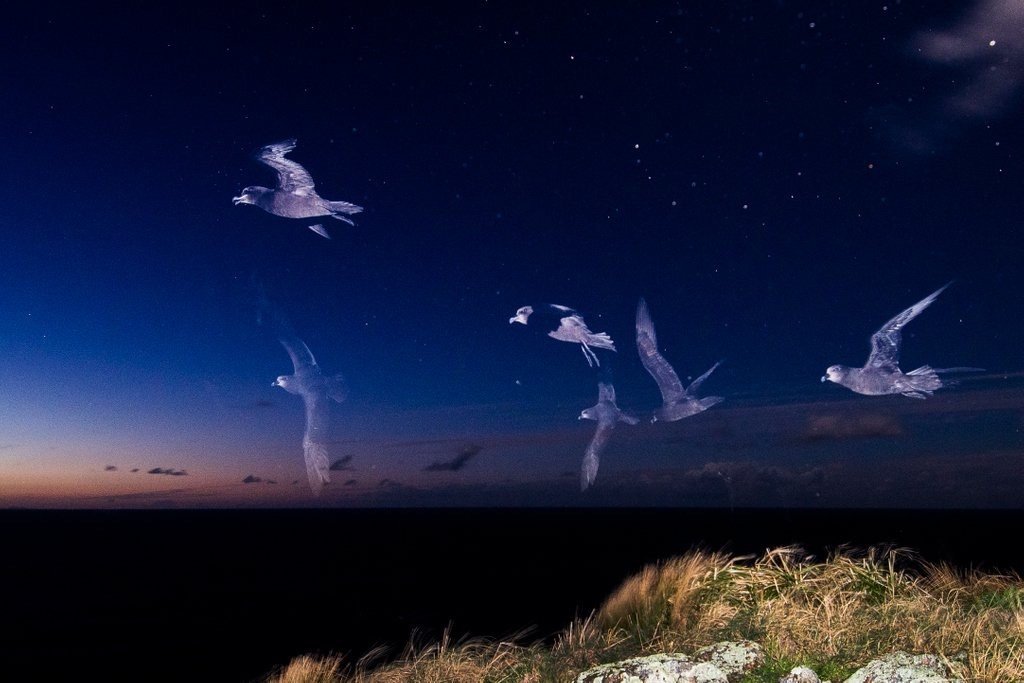
Grey faced petrel/Ōi
They bring marine nutrients inland through their guano (dried excrement of seabirds), effectively fertilising coastal ecosystems and supporting plant and insect life. In turn, these enriched environments support other native species, meaning the presence of seabirds can shape entire ecosystems.
In this way, the Ōi is more than just a seabird. It’s an ecosystem engineer, quietly linking ocean health to life on land.
So next time you’re near the coast at dusk, pause for a moment and listen closely. That distant, ghostly call drifting in from the dark might just be an Ōi, returning home after a day spent riding the open ocean.
Sources
Information and inspiration provided by Chris Gaskin and the Seabird Trust.
Additional information sourced from the Department of Conservation (DOC) and Birds New Zealand.
Ecological insights on seabird nutrient transfer adapted from Towns et al. research on seabirds and ecosystem function.