
Aotearoa’s Seabird Superhighway: Meet the Kāruhiruhi (Pied Shag)
Did you know the Hauraki Gulf is a globally significant seabird superhighway? While only about 365 of the world's 11,000 bird species are considered seabirds, a staggering one-third of all seabirds are found in Aotearoa, New Zealand.
Critically, the Gulf itself hosts 27 breeding species, including five that breed nowhere else on Earth. This includes two avian treasures: the endangered tara iti (NZ fairy tern), our rarest bird, and the takahikare raro (NZ storm petrel), which was famously rediscovered in 2003 after being thought extinct. (Information and inspiration courtesy of Chris Gaskin and the Seabird Trust)
Among the Gulf’s most misunderstood residents is a bird many people know simply as a “shag”.
Kāruhiruhi (Pied shag)
Sleek, sharp-eyed, and often seen perched motionless along the coast, the kāruhiruhi is one of the Hauraki Gulf’s most skilled underwater hunters.
With partially wettable feathers that reduce buoyancy, pied shags are exceptional divers, able to pursue fish beneath the surface with remarkable speed and agility. But those same feathers come with a trade-off: unlike many seabirds, shags are not fully waterproof.
That’s why they are so often seen standing with wings spread wide to dry, a behaviour that has become one of their defining silhouettes around harbours, rocks, and estuaries throughout Aotearoa.
Despite being highly adapted predators and important members of coastal ecosystems, shags have long carried an unfair reputation.
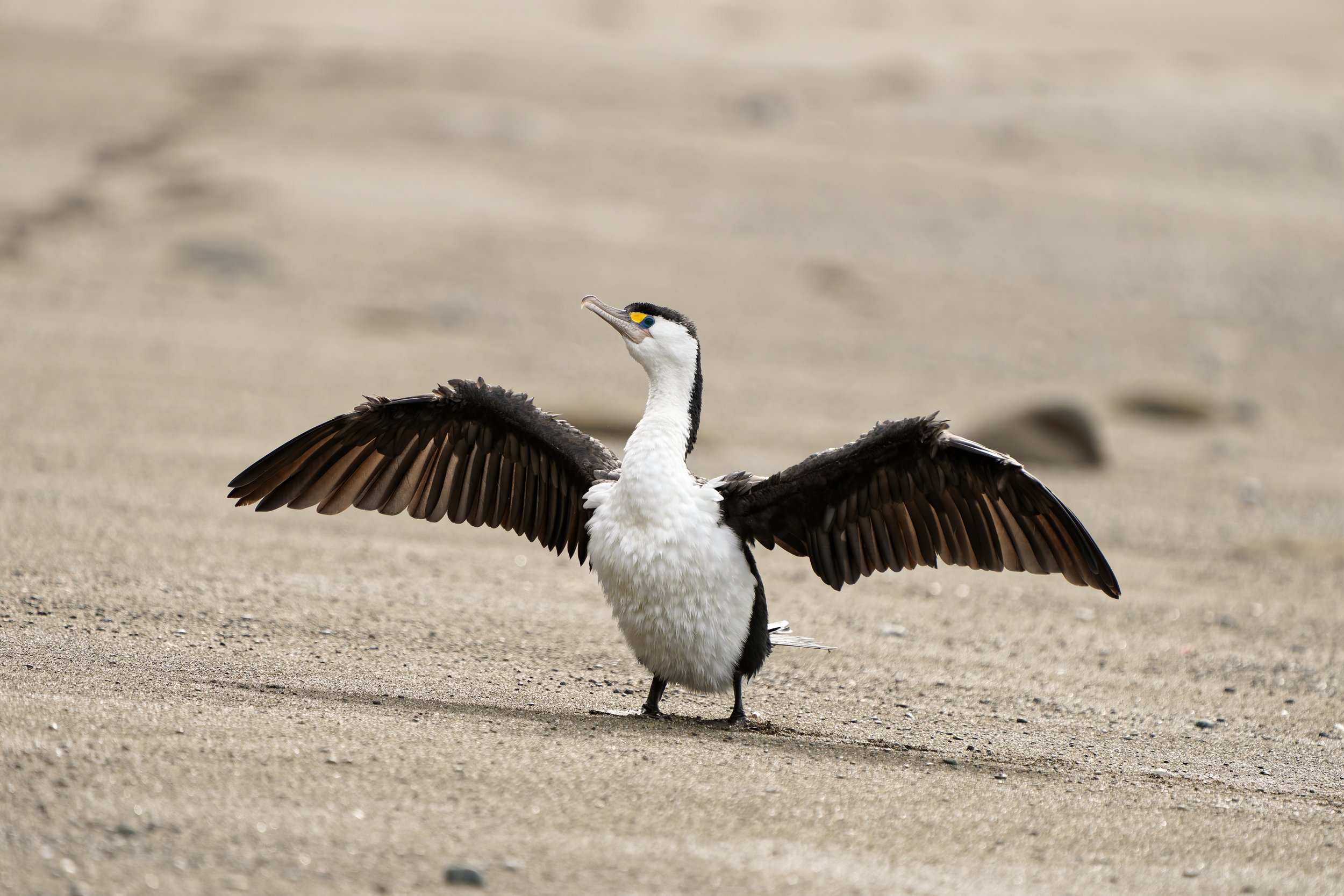
Kāruhiruhi (Pied Shag) by Kevin
A bird that “cops it bad”
Historically, shags were heavily persecuted across New Zealand.
For decades, they were wrongly blamed for declines in recreational and commercial fish stocks, leading to widespread culling of colonies and nesting sites. In reality, research has shown that shag diets are varied and often include smaller or non-commercial fish species.
But once a reputation takes hold, it can be difficult to shake. Even today, shags are still sometimes viewed negatively, despite their important ecological role as natural predators within healthy marine systems.
Life between sea and trees
Unlike many seabirds that nest on cliffs or underground burrows, kāruhiruhi often breed in trees near sheltered coastlines, estuaries, and harbours. Colonies can form in pōhutukawa and other coastal vegetation, where nests are built from sticks and seaweed high above the water.
These nesting sites can become busy, noisy communities during breeding season, with adults constantly arriving and departing in search of food.
But breeding close to the mainland also comes with risks.
Introduced mammalian predators such as rats, stoats, and feral cats can threaten eggs and chicks, while habitat loss and disturbance around coastal margins can reduce suitable nesting areas over time.
Because pied shags rely heavily on calm inshore waters, they are closely connected to changes in estuarine and coastal ecosystems.
Indicators of a changing coastline
Kāruhiruhi feed mainly on small fish and marine invertebrates caught near shore, making them closely tied to the health of shallow coastal environments.
Sedimentation, pollution, declining water quality, and habitat degradation can all influence prey abundance in these ecosystems. As coastal conditions change, shag populations may also respond through shifts in breeding success, colony locations, or local abundance.
For this reason, seabirds like the kāruhiruhi can act as indicators of broader environmental change happening along our coastlines.
Their presence tells us something important about the state of the waters they depend on.
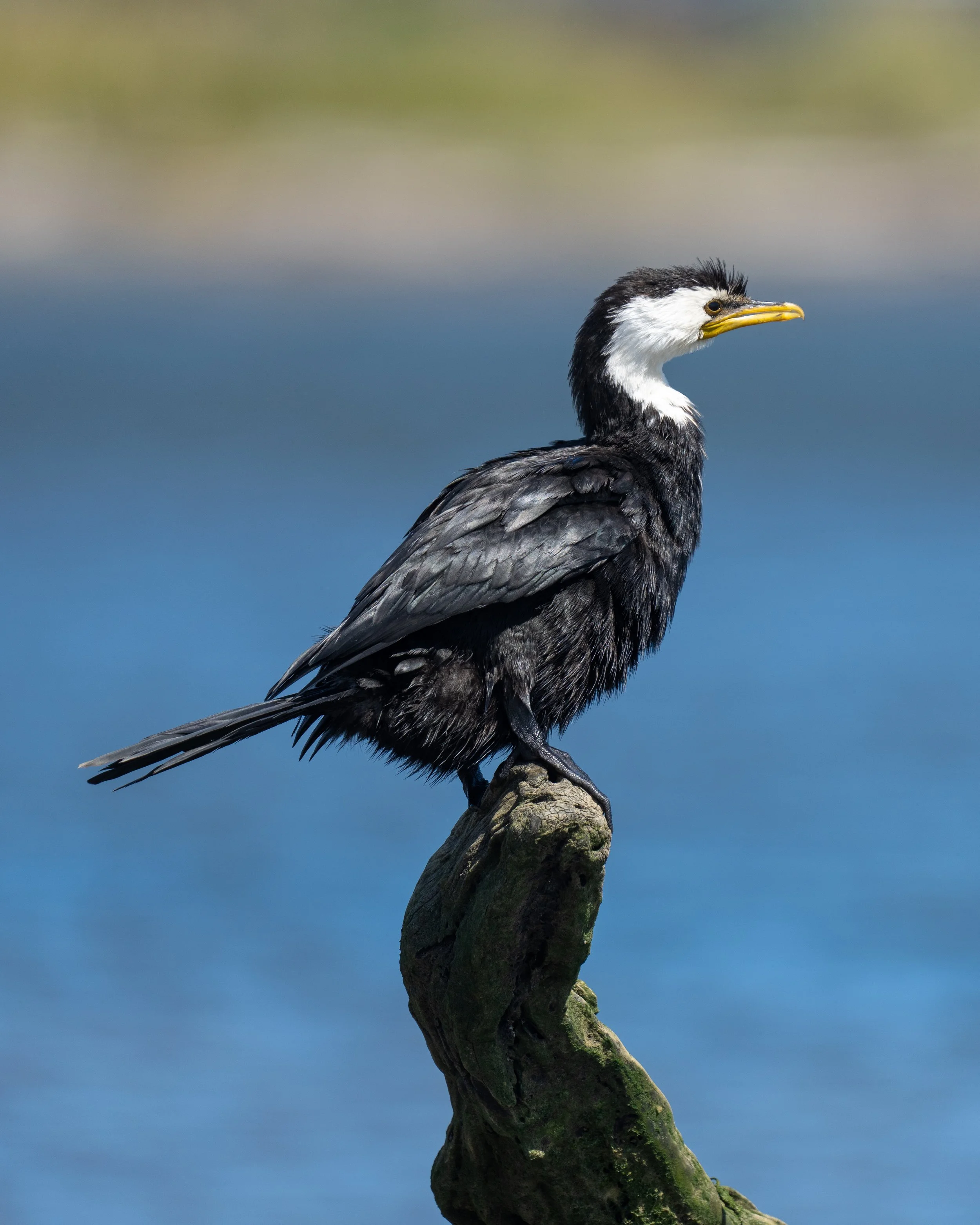
Kāruhiruhi (Pied Shag) By Acres
More than just a “shag”
Although they are common around much of the Hauraki Gulf, kāruhiruhi are easy to overlook or misunderstand.
But beneath the old myths is a bird perfectly adapted to life at the edge of land and sea: an efficient diver, a devoted parent, and an important part of coastal food webs.
So next time you spot a shag drying its wings along the shoreline, pause for a moment before dismissing it. That familiar silhouette represents far more than an old fishing story; it’s part of a much bigger ecosystem, and a reminder of how connected the health of the Gulf really is.
Sources
Information and inspiration provided by Chris Gaskin and the Seabird Trust.
Additional information sourced from the Department of Conservation (DOC) and Birds New Zealand.
Ecological insights adapted from New Zealand seabird and coastal ecosystem research.