Feathered Flirtations: how Aotearoa’s birds do romance
Spring is in the air, and that’s not the only thing… in the bird world, it’s “cuffing season”. Welcome to Feathered Flirtations, a series celebrating the impressive, eye-opening, but sometimes endearingly unimaginative courting rituals of birds found in Aotearoa.
From dive bombing to a battle of the roosts, and some plain ol' nudging, their quest for love is fascinating and entertaining to us, but pure survival and instinct for them. Uncover the hidden quirks that make wildlife mating rituals so interesting in Aotearoa, and maybe even get some ideas for your next date night?
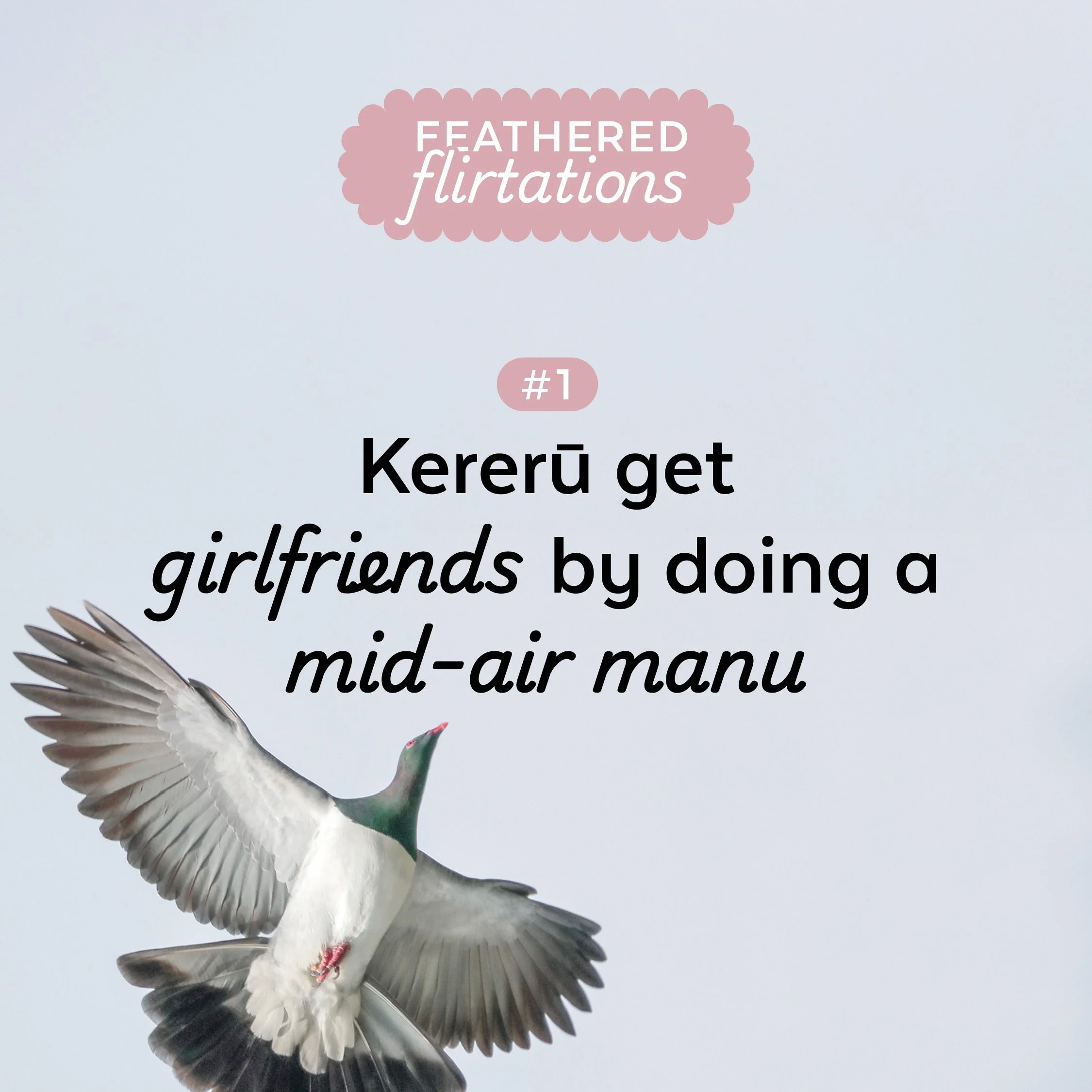
1: Kererū: A mid-air manu? That’s how kererū impress their girlfriends.
It’s a quintessential Kiwi classic that any potential partner loves: the manu. But did you know kererū perform them to get girlfriends too? Except this time, they’re mid-air.
Spring is when male kererū start to perform one of their most fascinating and impressive mating rituals, their flight displays. Soaring upward, once they reach the height of their display, they almost appear to stall. Then, in the blink of an eye, they hurtle back towards earth, nose-diving with loud wing claps as they go. A marvel to see in person, but talk about a way to ruffle a few feathers.
After all that showing off, the kererū has an old-fashioned trick up its sleeve, a little chivalry to really end on a high. On the ground or on a branch, males will coo softly and bow to the female, puffing up their iridescent chest feathers as a sign of affection (and how he really feels!)
So if you’re looking to kererū for dating advice, there is one takeaway: sometimes showing off actually works. He flew high, he fell fast… and somehow, she still said yes.
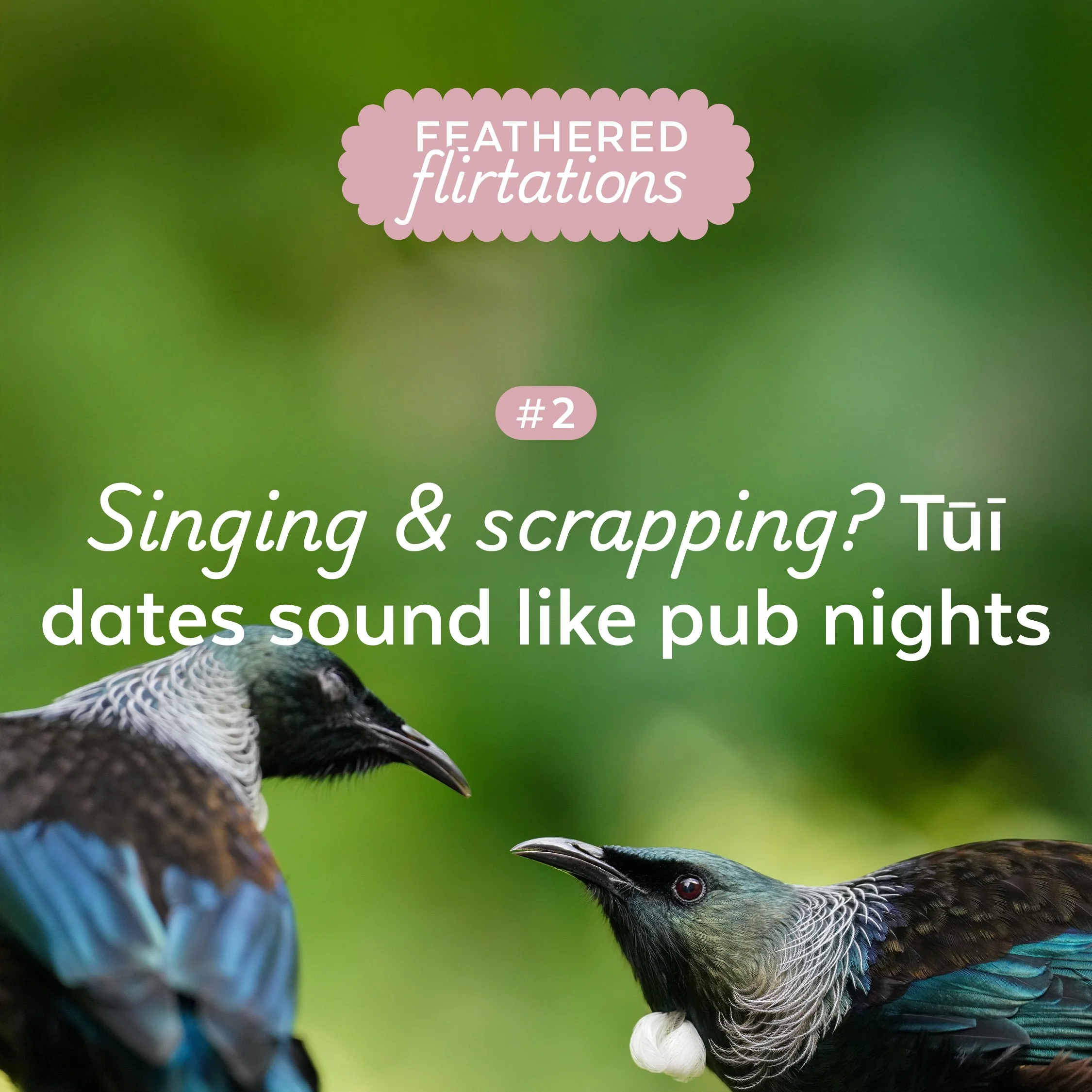
2: A songbird with a flair for the dramatic, and a temper to match. That's the tūī.
If you're after dating drama, forget Love Island. When it comes to romance, nothing is more melodramatic than a male tūī in spring. They aren't the type to whisper sweet nothings; they're the type to prepare a full-blown performance to win their lady love: vocals and choreography, both blindly bold. Just like what you'd see on a lively boys night at the pub.
To begin their quest for love, male tūī stake out their territories and sing from the highest perches, filling the canopy with an orchestra of gurgles, whistles, clicks, and coughs. It's part love song, part declaration of dominance, and part desperate plea à la "pick me, choose me, love me". These performances, amazingly, are unique to every tūī. Style points for originality.
But music isn't their only move; this is a theatrical spectacular, remember? When a female appears, it's time to get physical. Males launch into high-speed aerial chases and looping dives through the trees, their feathers flashing iridescent blue-green in the sunlight. Between bursts of song, they puff up their glossy plumage and fan their white throat tufts, those iconic poi, in a gleaming display of confidence.
It comes as no surprise that, just like those guys on Love Island, they are not afraid to throw their weight around. Tūī are fiercely territorial, known to chase off other suitors perceived as a threat, sometimes even much larger species, to defend their patch of nectar and nesting space. It's equal parts bravado and strategy, which to some birds is a real sign of husband material.
If the female's impressed by all of these theatrics, she might join the duet, and that's about the human equivalent of slipping on an engagement ring. Together they'll build a nest high in the canopy, a soft, woven bowl lined with moss and grasses, and prepare for the rest of forever (aka the few months of this mating season).
So, if you're taking notes from tūī this spring, remember: confidence is key, a unique display of love never hurt anyone, and the ladies love a puffed-out chest.
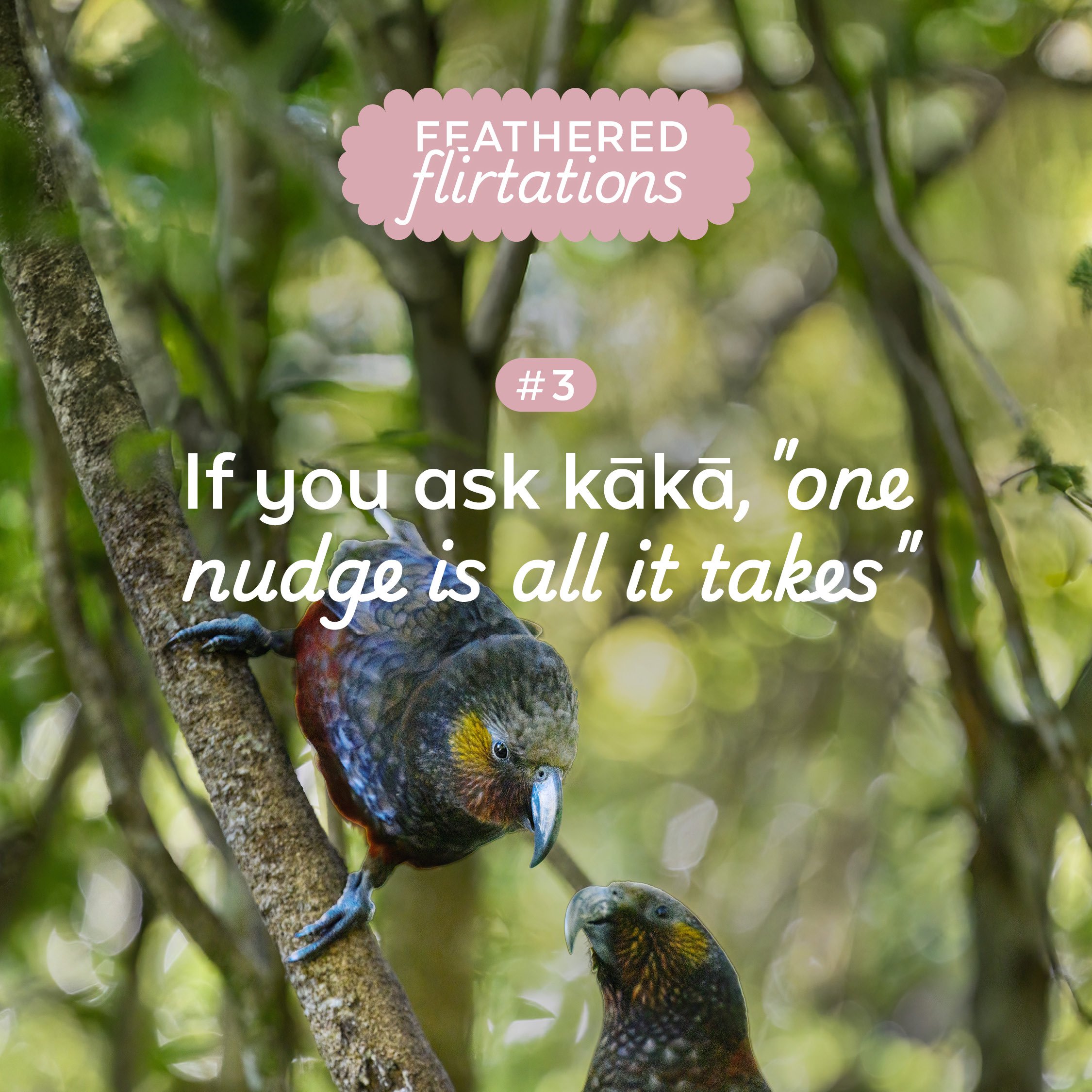
3: When it comes to romance, kākā think a good ol' nudging will do.
We've met birds that put on aerial acrobatics, others break into song. But the kākā? They think Dua Lipa sings it best: "one kiss nudge is all it takes."
Yup, courtship for this forest parrot is comically underwhelming at first glance. He just… nudges… Honestly, you might have seen a piece of wood with more game. It goes down like this: the male approaches a female, and gently pushes her with his foot, forehead, or beak, a quiet, no-frills "you up?" text of the bird world. But don't be fooled by the slow start. Once she gives the signal, usually by lowering her head as he pulls away, things heat up quicker than you can say "do you want to build a nest with me?"
From there, it's the equivalent of a 4am wedding after a long night in Vegas. If she stays still, head lowered for a long enough time, the male knows what she wants him to do. He climbs on her back and… you can guess the rest.
But truthfully, it's not all so plain; kākā have a soft side too. When they've chosen each other, calls soften into a series of "tsee-tsee-tsee" notes, and the pair move in close, grooming each other with the kind of tenderness that says this is serious. Compared to other species, it's refreshingly uncomplicated, slightly underwhelming, but one of the most amusing no-nonsense approaches to love you'll see in the forest canopy.
If you're modelling your romantic moves on the kākā, go forth with your faith restored: sometimes all it takes is a well-placed, good-intentioned, old-fashioned nudgin'.
4: A special edition for a non-feathered friend, the pekapeka (New Zealand short-tailed bat).
Ok, they might not have feathers, but when it comes to romance, the pekapeka knows how to make some ultrasonic noise, and we just had to share.
Male short-tailed bats' approach to love feels straight out of a sci-fi movie. Each one claims an individual "mating roost", a tiny bachelor pad high in the forest, and spends the night broadcasting ultrasonic love calls to any female flying past. It's somewhere between E.T. phoning home and a late-night DJ set. These calls aren't songs in the musical sense; they're rhythmic, repetitive pulses, delivered over and over (because he sure is persistent.)
And like any human date, smell is an unspoken turn-on. That's why male pekapeka scent-mark the entrance to their roosts with a "musky perfume", which is just a fancy way of saying "an oily secretion produced in scent glands on the throat". A little bit funky when you think about it… But it plays its part in attracting a lady, and guarantees she has zero confusion about where the front door is.
Females, curious and cautious, swoop in to inspect potential partners, and if a call hits the right frequency, she might just slip inside the roost for a brief (and very efficient) encounter.
You might assume after a few minutes of lovemaking, a baby bat is on the way… but you couldn't be more wrong! Pekapeka mate between February to May, but with delayed implantation of the embryo, their young arrive the following summer (as early as December!) Females give birth to a single pup, which is hairless but otherwise well-developed, and weighs just 5 grams. They leave their maternal roost at six weeks of age, and within three months, they are fully grown.
Compared to our feathered friends, their dating approach is less "grand gesture" and more "mating protocol: engaged", but it works all the same, just as nature intended.
So, if you've ever broadcast into the void looking for love, maybe leave that to the bats… unless your DMs are ultrasonic. Just stick to a nice cologne instead.
📷 Dan Riskin
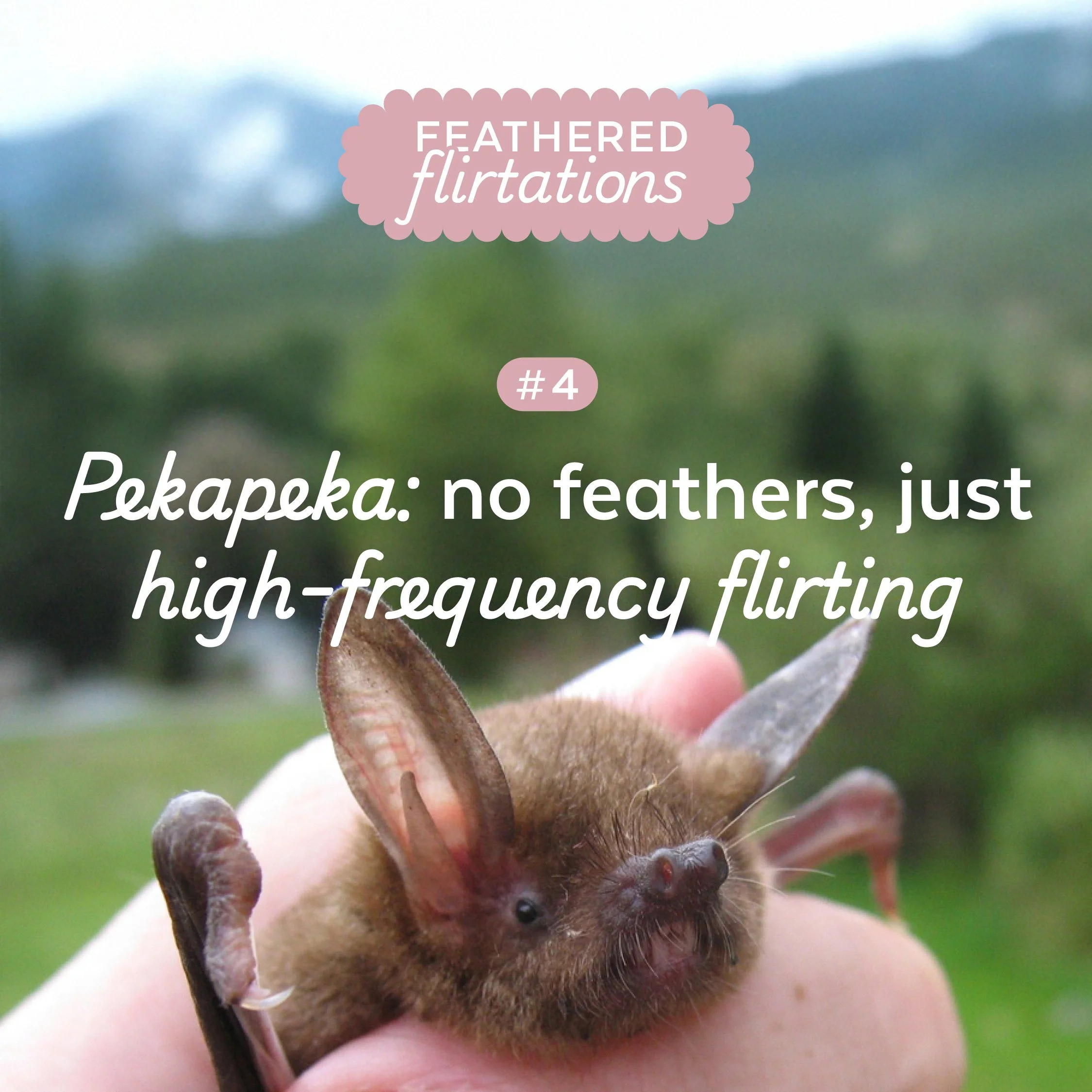
5: Love language? Lasting loyalty. Meet the tauhou (silvereye).
If the forest had a Disney prince, it would be the tauhou: tiny, olive-green, and devoted in a way most of us can only dream of.
While plenty of Aotearoa's birds are out here showing off with acrobatics and dramatic performances, tauhou take a different route: they choose one partner for the breeding season… and often keep choosing them, year after year. It's giving golden retriever boyfriend energy from a bird that weighs less than a Tim Tam.
Tauhou form monogamous pairs during breeding, sticking close as they defend their little patch of forest together. And when they find the right match, some pairs stay together across multiple years, raising brood after brood like the tiny power couple they are. Move over, Posh and Becks!
Their courtship isn't loud or flashy; it's soft, understated, and full of small gestures. They communicate with gentle high-pitched warbles and trills, repeating them like a quiet reassurance: "If we've got each other, we're good." It's intimate without being dramatic; a conversation just for two.
And then there's the tenderness. Tauhou pairs have been seen perched together, leaning in to perform mutual preening, carefully tidying one another's feathers. A tiny act of care that's so wholesome not even a witty reference does it justice. But that's how tauhou are: tender in most things they do. They stay close, move together through the branches, and keep each other within sight. It's a steady companionship that goes the distance.
So, if you're taking notes from the tauhou this spring, remember: romance doesn't always need fireworks. Sometimes love looks like gentle chatter, small acts of care, and choosing each other, again and again, in every new season.
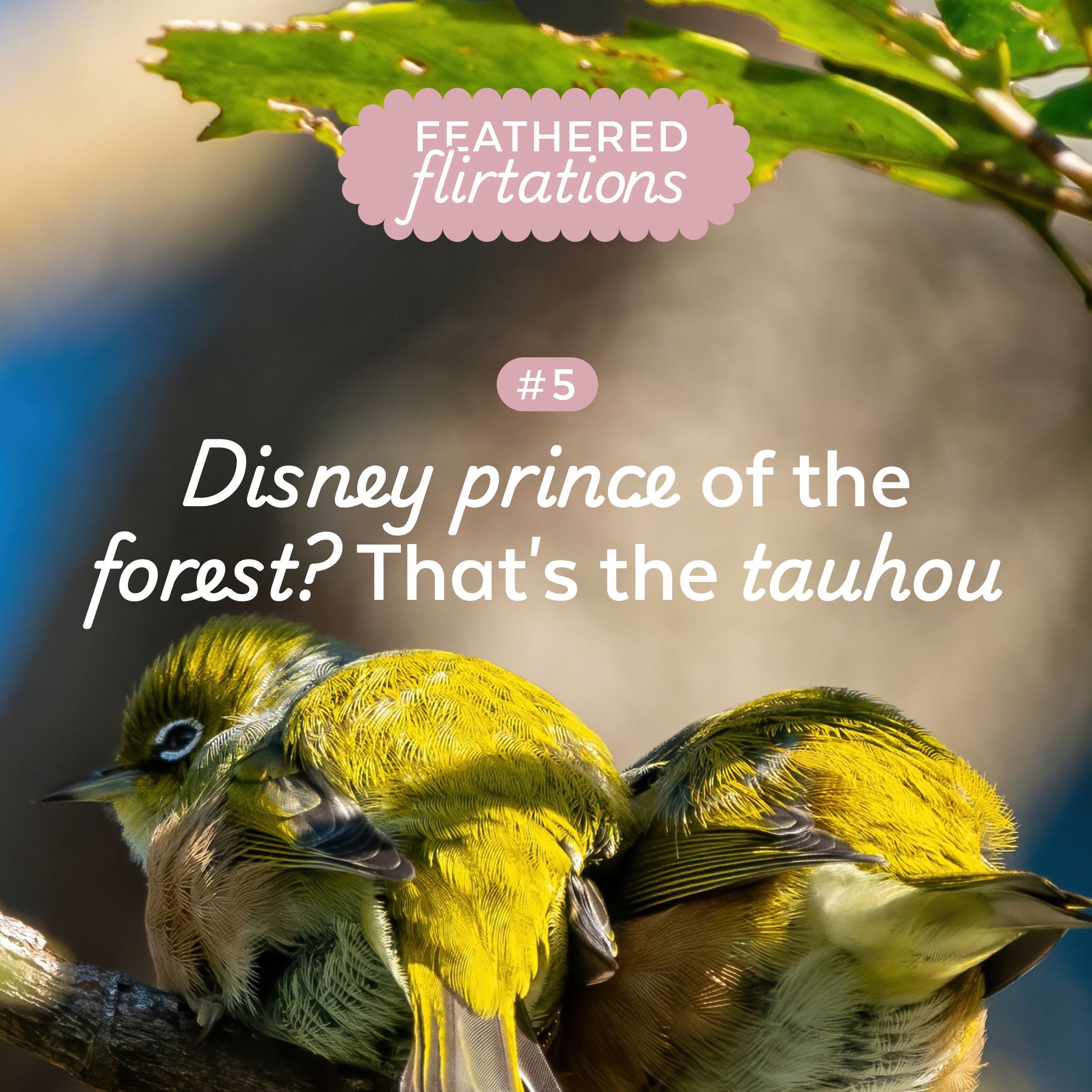
6: The DIY romantic of the shoreline. Meet the tūturiwhatu (New Zealand dotterel).
If you thought romance meant flowers, chocolates, or serenades, the tūturiwhatu would like to offer a different perspective: real love begins with a shallow hole in the sand.
During courtship, the male dotterel becomes a one-bird home-renovation show. He scrapes out not one, not two, but several potential nest hollows, each one a carefully crafted sandy suggestion of "our future together." (Yes, this is real, and yes, it's adorable.)
Once he's prepared a selection of beachfront bachelor pads, he presents them to the female with great enthusiasm, a ritual known as the scrape ceremony. It's part open home, part dramatic self-pitch. Only one scrape will become the scrape, and the female alone gets final say.
When she finally settles into the chosen hollow, the male knows he's nailed it: she's accepted his real estate offer and so much more. From there, the pair settle into the business of raising a clutch in one of Aotearoa's most vulnerable habitats, the open, sandy shoreline.
NZ dotterel's romance is a masterclass in quiet effort: thoughtful preparation, dedication, and the willingness to build and rebuild until the right partner says yes.
A beautiful reminder for all the lovers out there: sometimes the most romantic thing you can do is create space for someone to choose you, even if that space is literally a hole in the sand.
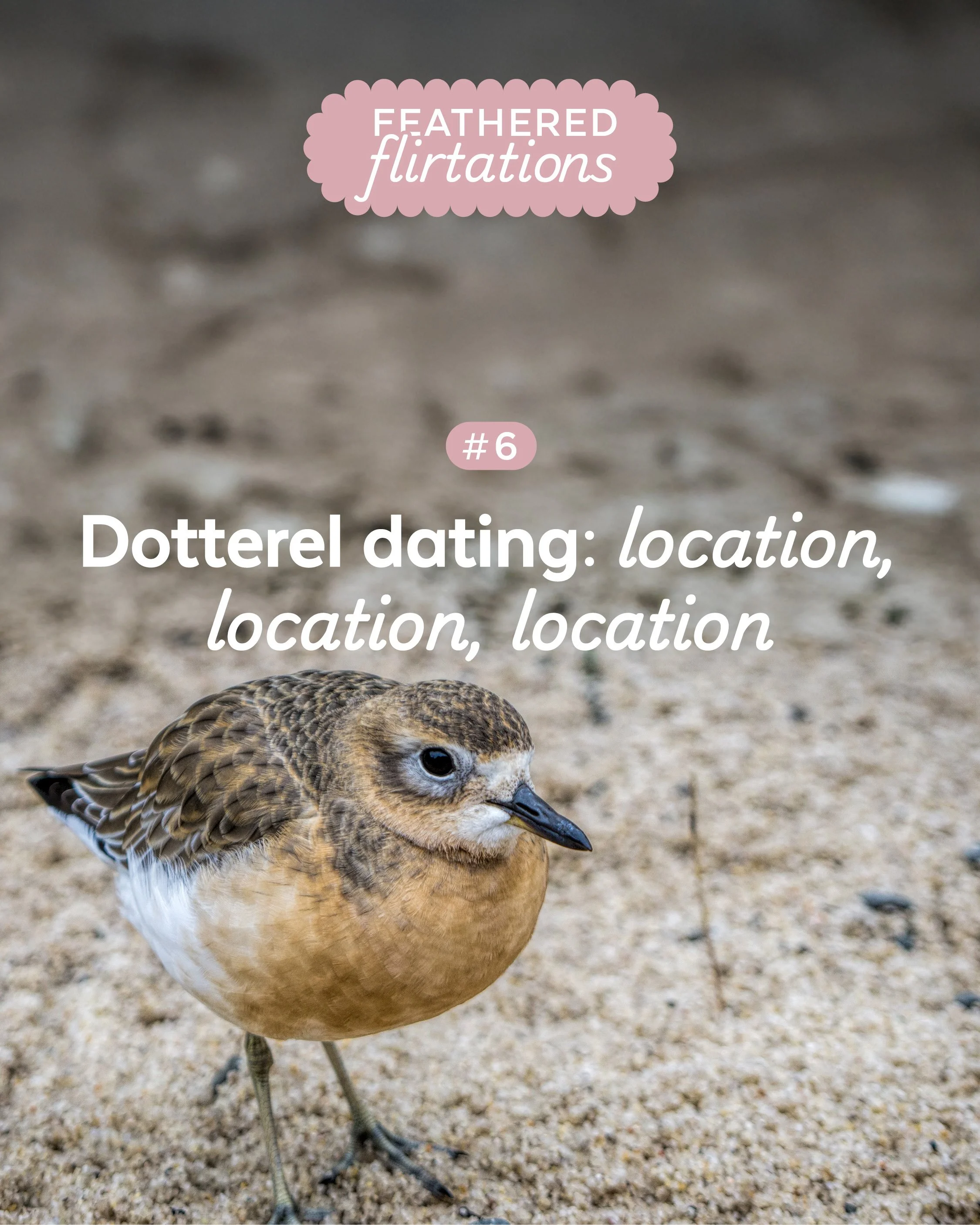
7: The synchronised swimmers of the wetlands. Meet the weweia (New Zealand dabchick).
If you thought romance was complicated on land, wait until you see how the weweia does it, entirely on water, and with impeccable timing.
Courtship between dabchicks is all about ritual and synchronicity. One of their most striking displays is the Patter Ceremony, where one or both birds skim-run across the water's surface in a rapid burst of movement. It often follows a territorial encounter, acting as a dramatic reset; a way of saying, "We good? Let's carry on."
Then there's the Diving Ceremony, a series of coordinated, ritualised dives used during pair formation. It's less about showing off and more about testing compatibility: can you keep up, match my timing, and resurface together?
Once paired, the displays soften into something more intimate. The couple engages in mutual rituals including preening one another, turning their heads in unison, and rearing up together in the water like a perfectly rehearsed duet. It's not flashy. It's intentional. And it's very much a two-way performance.
Weweia don't rely on grand gestures or solo stunts. Their romance is built on cooperation, rhythm, and shared movement; a reminder that sometimes the most compelling love stories aren't loud… they're perfectly in sync.
Notes taken, weweia: chemistry isn't just about attraction, it's about timing, trust, and knowing how to move together… even when the water's a little choppy.
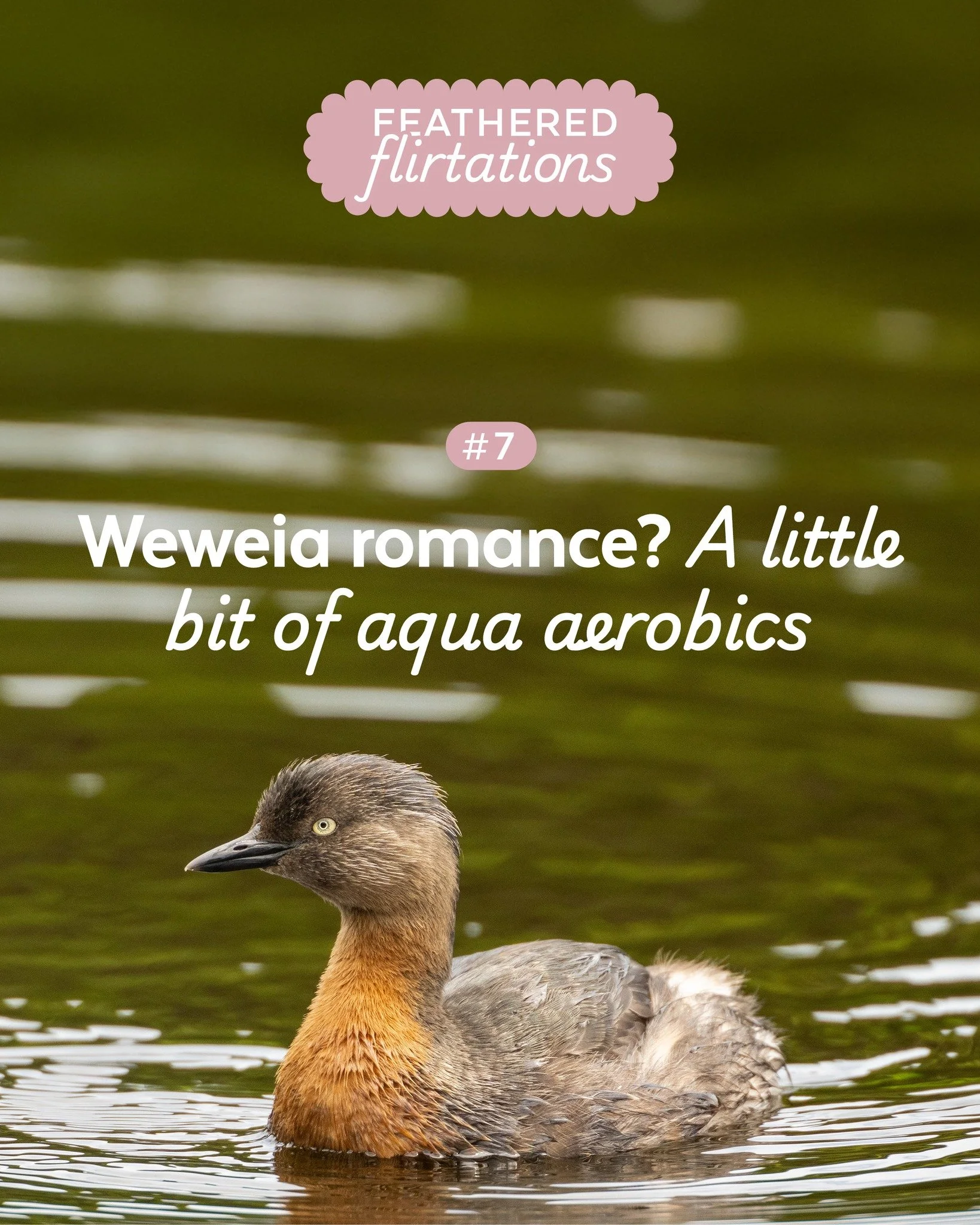
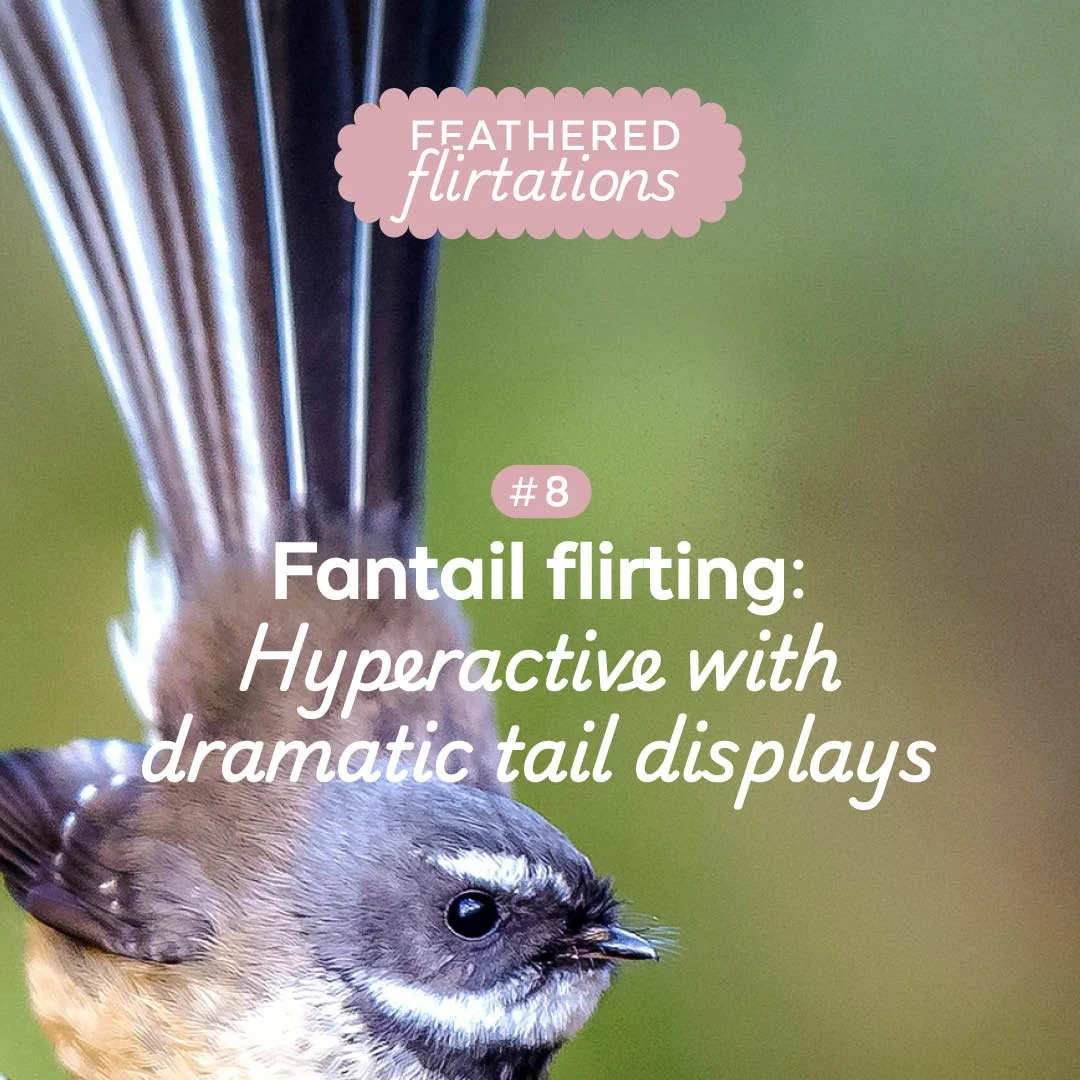
8: Zero chill, maximum flirt. Meet the pīwakawaka (fantail).
If you've ever had a pīwakawaka dart around your head on a bush walk, you'll know one thing: personal space is not part of their brand.
When it comes to romance, that same energy gets turned all the way up. Pīwakawaka courtship is fast, fluttery, and just a little bit chaotic, like someone who's had one too many coffees and decided now is the perfect time to fall in love.
Males put on a high-energy display, fanning out their iconic tails and flicking their wings as they dart through the air. It's part performance, part persistence, as they chase and circle potential partners through the trees, never sitting still for long. If you can't keep up… you're probably not the one.
There's also a constant stream of chattering calls, as if to say, "Hey! Over here! No, here! Still here!" It's equal parts enthusiasm and determination, wrapped up in one very small, very committed bird.
So, if you're taking notes from the pīwakawaka, remember: sometimes love isn't slow and steady. Sometimes it's quick, energetic, slightly overwhelming… and impossible to ignore.
📷 by Pete Rees Photography